
- Practical Engineering Perspective
- Mechanical Separators
- Geotextile Dewatering Bags
- Filter Presses
- Comparison Table
- Combining Technologies in a Staged System
- Matching Technology to Project Duration
- Space and Site Constraint Considerations
- Cost Considerations Beyond the Headline Equipment Price
- Testing Actual Material Before Committing to a Technology
- Engineering Pros-and-Cons Framework
- What to Send for a System Recommendation
- Frequently Asked Questions
- Related Slurry Separation Resources
- Request a Project-Specific System Recommendation
A procurement comparison based on the work each technology is actually good at.
Choose a pump-fed shaker when continuous primary separation and compact deployment matter; choose geotextile tubes when land is available and batch filling/drainage fits the schedule; choose a filter press when a dense cake and controlled filtrate justify higher infrastructure and operating complexity. Mixed feeds often perform best in a staged system.
| KEY TAKEAWAY |
| Do not compare equipment by “dryness” or purchase price alone. Compare the feed each unit can accept, the particle fraction it removes, throughput under representative material, discharged solids condition, water endpoint, footprint, utilities, labor, consumables, cleaning, downtime, and the cost of downstream handling. |
Practical Engineering Perspective
In our equipment-review workflow, we treat the shaker as the first controlled cut in a solids-management train. That keeps the recommendation honest: the screen handles the fraction selected by its configuration, while fines and water-quality requirements may need another stage.
This article reflects Slurry Separation’s published engineering and configuration approach. It does not claim that every material has been field-tested. For a high-consequence or unfamiliar duty, use representative testing and written acceptance criteria before procurement.
Mechanical Separators
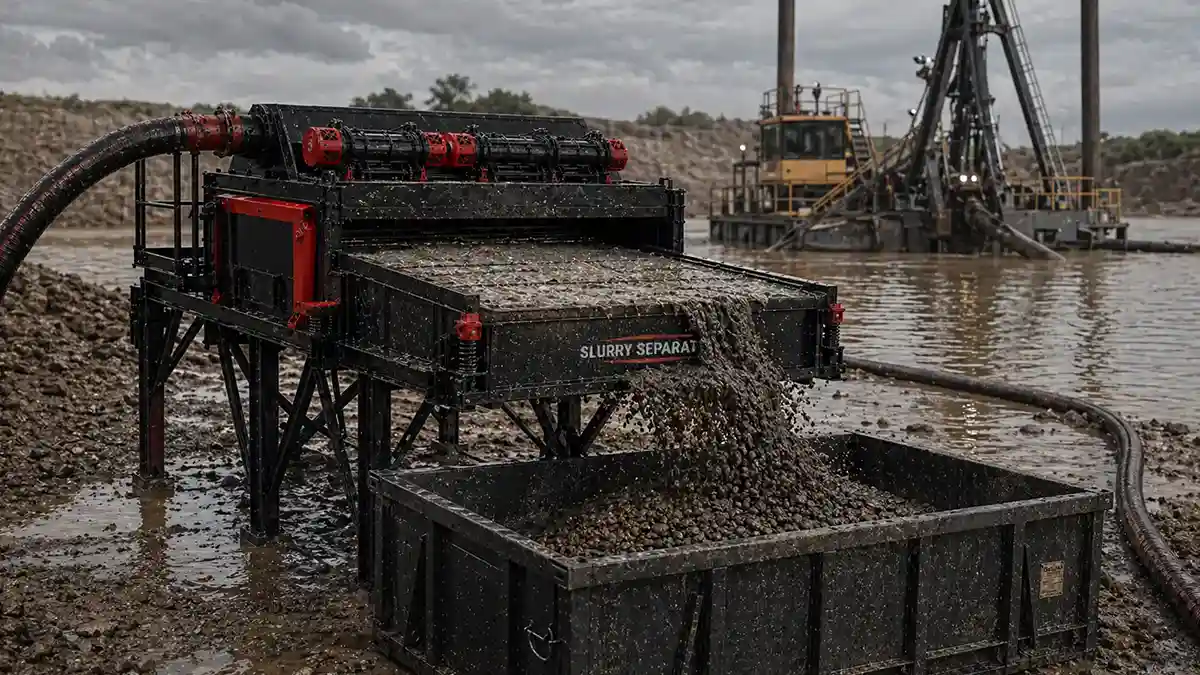
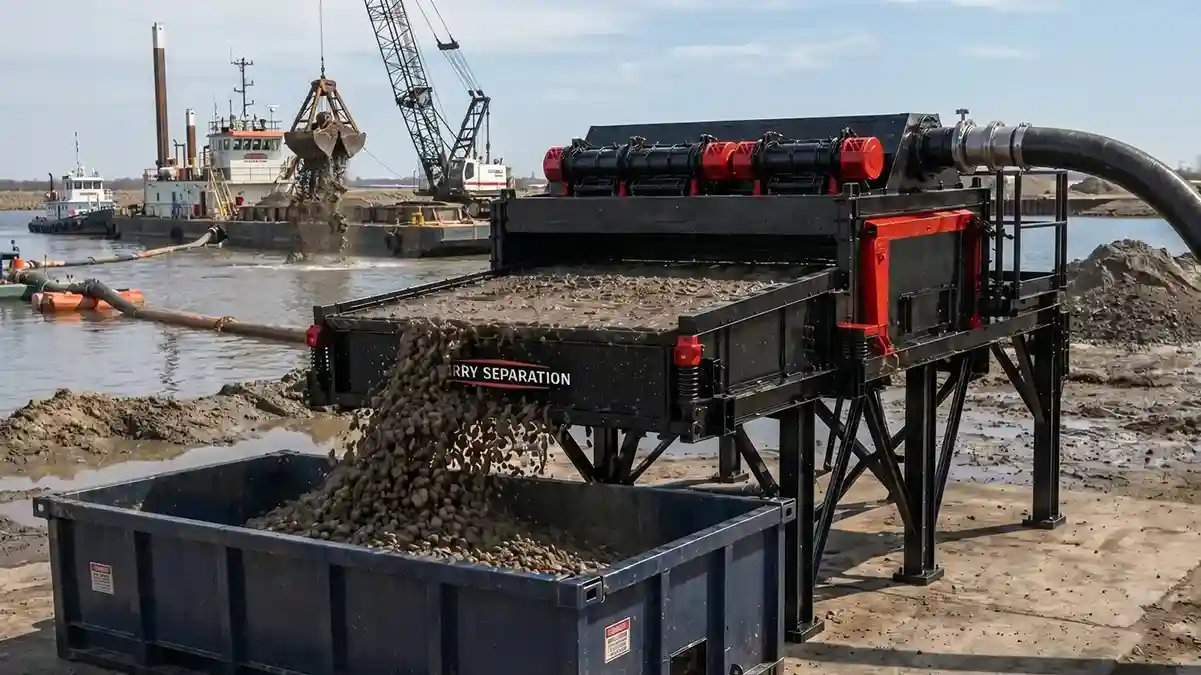
For this brand, “mechanical separator” should first mean a vibrating slurry separator or shale shaker configured for dredged slurry. The S-Force 1000 page lists a nominal capacity of 616 GPM, four screens, adjustable force up to 7.5G, and an adjustable deck; actual duty depends on feed, screen selection, solids loading, distribution, and downstream constraints. The patented 4D panel adds progressive layers for scalping, separation, and dewatering. Shakers are strongest as continuous primary or staged equipment—not as an automatic fine-water polishing solution.
Geotextile Dewatering Bags
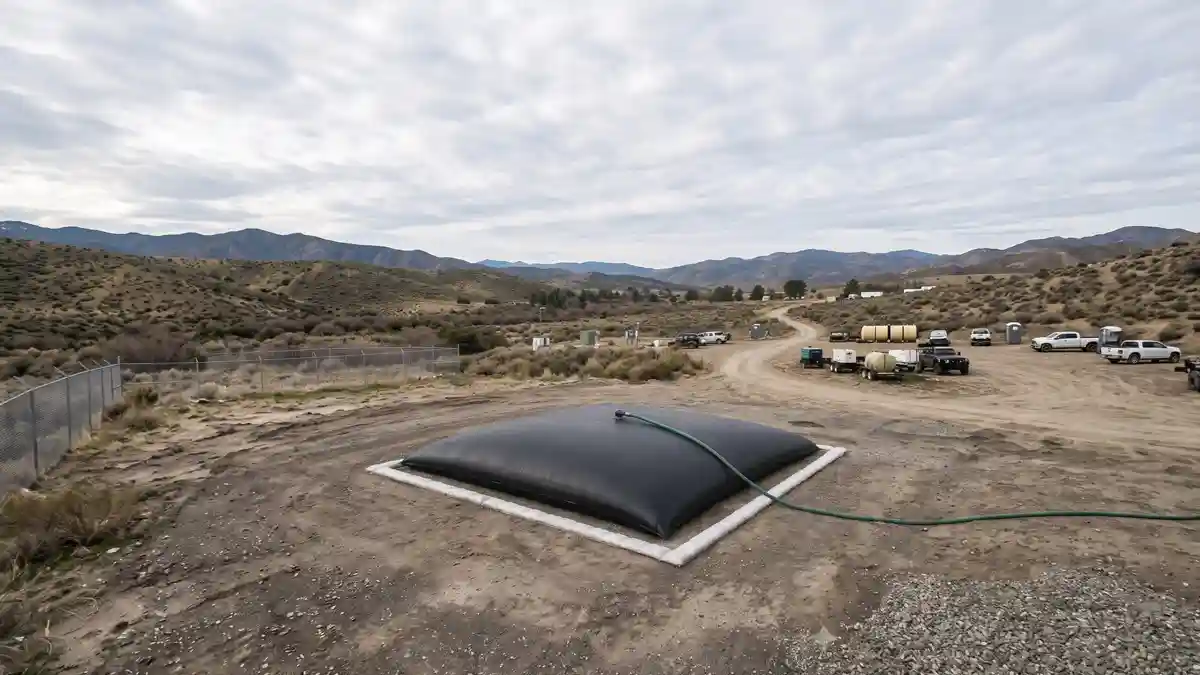
Geotextile tubes provide containment and drainage rather than a mechanically defined screen-deck cut. They can handle fine material when the selected fabric, polymer program, filling cycle, drainage collection, footprint, and curing time work together. Their apparent simplicity shifts work into site preparation, polymer control, tube sequencing, filtrate management, weather protection, opening, solids removal, and final disposition.
Filter Presses
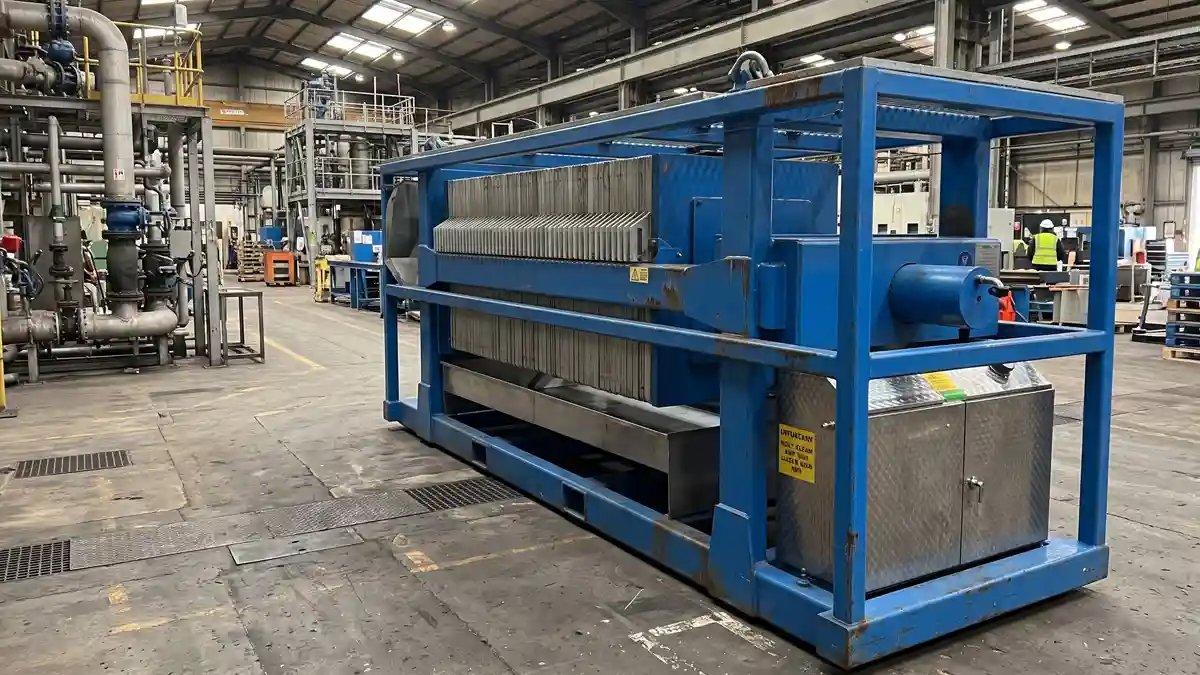
A filter press can produce a denser cake than primary screening, but only with feed conditioning and cycle management matched to the slurry. Budget for equalization, pumps, polymer or conditioning where required, cloth selection and cleaning, compressed air or hydraulics, cake discharge, wash water, operator time, and the effect of sticky or variable material on cycle length.
Comparison Table
| Factor | Pump-fed shaker | Geotextile tube | Filter press |
|---|---|---|---|
| Feed | Raw pump discharge when hydraulically integrated | Conditioned slurry pumped into containment | Conditioned feed within press limits |
| Process | Continuous vibration and screening | Batch filling, filtration and gravity drainage | Pressure filtration in repeating cycles |
| Solids result | Screen-retained, drained solids; dryness varies | Consolidated solids after drainage/cure | Typically denser cake |
| Water result | Screened liquid; may need more treatment | Filtrate; polymer/fines management may remain | Filtrate; quality remains feed/media dependent |
| Best procurement question | What production can the approved screen configuration sustain? | How much pad area and tube cycling are required? | What cycle time and cake discharge rate are realistic? |
Combining Technologies in a Staged System
Many real projects don’t choose a single technology exclusively—a common and often optimal configuration pairs mechanical separation as a first stage (removing the coarse fraction quickly and reducing the volume that needs fine-particle treatment) with geotextile or filter press treatment as a second stage for the remaining fine material. This staged approach can deliver better overall throughput and cost efficiency than trying to force any single technology to handle the full particle size range of a mixed-gradation slurry.
Matching Technology to Project Duration
Project duration is a real, practical factor beyond the pure technical particle-size match. Short-duration projects generally favor geotextile dewatering’s lower capital commitment and straightforward mobilization; longer or recurring projects can more easily justify a filter press’s higher capital cost, since that cost amortizes across more total operating volume; and projects with high, sustained throughput needs regardless of duration often need mechanical separation as at least a first stage simply to keep pace with the volume being generated.
Space and Site Constraint Considerations
Geotextile dewatering requires meaningful land area for the containment bags or tubes themselves, which can be a real constraint on sites with limited available space near the dredging operation. Filter presses have a smaller physical footprint for equivalent throughput but require reliable power and more substantial site infrastructure (concrete pad, filtrate handling) than a geotextile deployment typically needs. Mechanical separation systems, particularly mobile skid or trailer-mounted units, generally have the smallest footprint of the three and the least site infrastructure requirement, which is part of why they’re frequently the default first-stage choice even on space-constrained sites.
Cost Considerations Beyond the Headline Equipment Price
A genuine cost comparison should include polymer and flocculant consumption (a real ongoing cost for both geotextile and, sometimes, mechanical separation approaches), disposal or hauling cost for final dewatered solids (which varies with how dry the technology gets the final product), and labor for operation and maintenance across the project’s full duration—not just the upfront equipment cost or rental rate, which can make a technically simpler but operationally more consumable-intensive option look cheaper than it actually is over a full project.
Testing Actual Material Before Committing to a Technology
Use representative samples and a written test plan where project risk justifies it. For screens, document feed rate, solids load, mesh/panel, retained fraction, water carryover, blinding, wear, and stability. For tubes, test polymer, fabric retention, drainage, and cure behavior. For presses, test conditioning, cloth, cycle time, filtrate, cake release, and moisture. A test is only useful when its feed and success criteria match the project.
Engineering Pros-and-Cons Framework
Use this framework during design review and bid leveling. It makes the trade-offs explicit and prevents a low equipment price from hiding downstream cost or risk.
| Decision factor | Pump-fed shaker | Geotextile tube | Filter press |
|---|---|---|---|
| Operating mode | Continuous screening | Batch fill and drain | Batch or semi-continuous press cycles |
| Strongest fit | Debris/coarse-to-selected-fine cut, compact first stage | Passive containment where footprint and cure time are available | Dense cake where infrastructure and operator support are justified |
| Main advantage | Fast integration with dredge discharge and modular scaling | Low mechanical complexity | High cake dryness and controlled cycle |
| Main constraint | Cut point and water quality are screen/feed dependent | Large footprint, polymer and drainage management, bag handling | Capital, utilities, feed conditioning, cloth cleaning, cycle labor |
What to Send for a System Recommendation
- Representative feed sample and particle-size distribution, including debris, organics, sticky material, and fines
- Flow and solids-load range, feed pressure, duty cycle, production goal, and peak/upset cases
- Required particle cut, solids dryness, stackability, hauling, reuse or disposal specifications, and water-quality endpoint
- Available land, drainage collection, foundations, power, compressed air, polymer, wash water, containment, access, and lifting
- Project duration, staffing, maintenance capability, consumables, residuals management, cleaning, mobilization, and total-cost assumptions
Frequently Asked Questions
Which option produces the driest solids?
A properly selected press often produces a denser cake than primary screening or tube drainage, but actual moisture depends on the material, conditioning, cycle, media, and operating target.
Can a 4D shaker replace every downstream stage?
No. It can improve staged screening and dewatering, but fine-particle or water-quality targets may still require secondary treatment.
When are geotextile tubes economical?
When footprint, drainage collection, fill cycles, cure time, polymer use, tube handling, and final solids removal fit the site and schedule.
What makes a staged system attractive?
Removing debris and a selected solids fraction first can reduce the load and wear on more expensive downstream equipment.
What should procurement compare?
Cost per accepted unit of production, including utilities, labor, consumables, downtime, water management, solids handling, and residual risk.
Related Slurry Separation Resources
- 4D shaker screens
- S-Force 1000
- direct pump integration
- system configurations
- dewatering applications
Request a Project-Specific System Recommendation
Send the team your pump and flow data, solids concentration and particle distribution, material characteristics, screen or separation target, water and solids endpoints, site layout, utilities, operating schedule, and production goal. Slurry Separation can review the application and recommend a pump-matched, skid-mounted, barge-mounted, or modular configuration based on current product options.
Request a System Recommendation or call (619) 383-6312.