
- Practical Engineering Perspective
- Why Fiber-Laden Slurry Behaves Differently in Separation
- Water Recovery for Process Reuse
- Fiber Recovery as a Value Stream, Not Just Waste Management
- Chemical Compatibility With Mill Process Chemistry
- Coordination With Mill Operations and Production Schedule
- Foam and Fiber Handling Considerations During Separation
- Confirming Fiber Content and Recovery Value Before Technology Commitment
- Engineering Pros-and-Cons Framework
- What to Send for a System Recommendation
- Frequently Asked Questions
- Related Slurry Separation Resources
- Request a Project-Specific System Recommendation
A mill-integrated approach to fiber, fillers, foam, water reuse, and product acceptance.
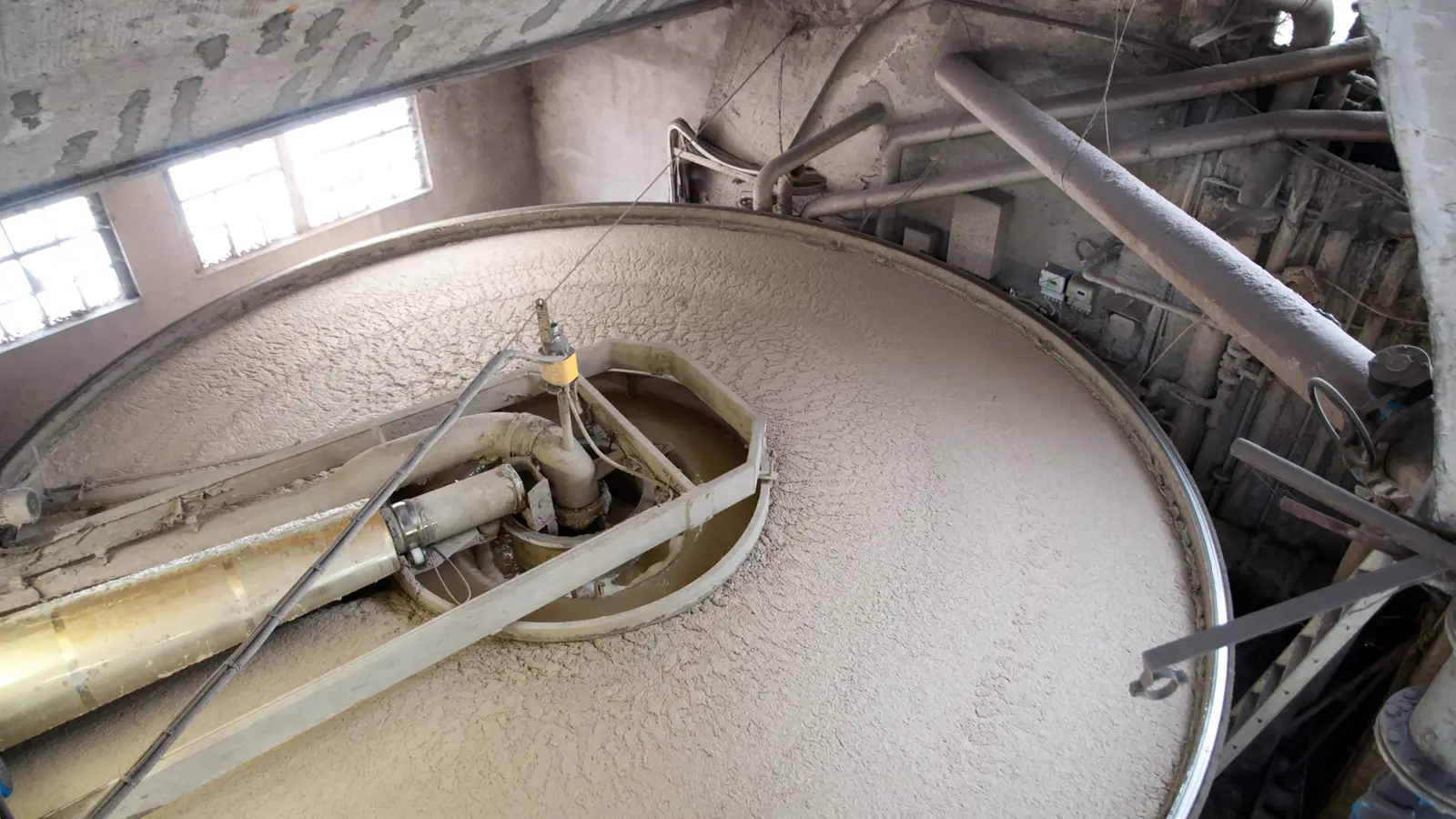
Pulp and paper pond slurry must be tested as a fiber-rich process residual, not treated like mineral sediment. A pump-fed shaker can screen fibers, bark, debris, plastics, and agglomerates when the panel and feed are matched, but fines, fillers, dissolved chemistry, stickies, foam, and water-reuse targets often require additional conditioning or treatment.
| KEY TAKEAWAY |
| Define the pond’s historic inputs, fiber/filler composition, stickies and debris, chemical environment, water-return destination, acceptable recovered-fiber quality, and mill outage or operating constraints. Then test screenability, drainage, blinding, foam, and downstream compatibility with representative material. |
Practical Engineering Perspective
Our configuration process starts with feed consistency and downstream handling. For a mill pond, that means involving process engineering and operations before choosing the screen: the same retained fraction can be a usable fiber stream, a contaminated residual, or a disposal problem depending on mill acceptance.
This article reflects Slurry Separation’s published engineering and configuration approach. It does not claim that every material has been field-tested. For a high-consequence or unfamiliar duty, use representative testing and written acceptance criteria before procurement.
Why Fiber-Laden Slurry Behaves Differently in Separation
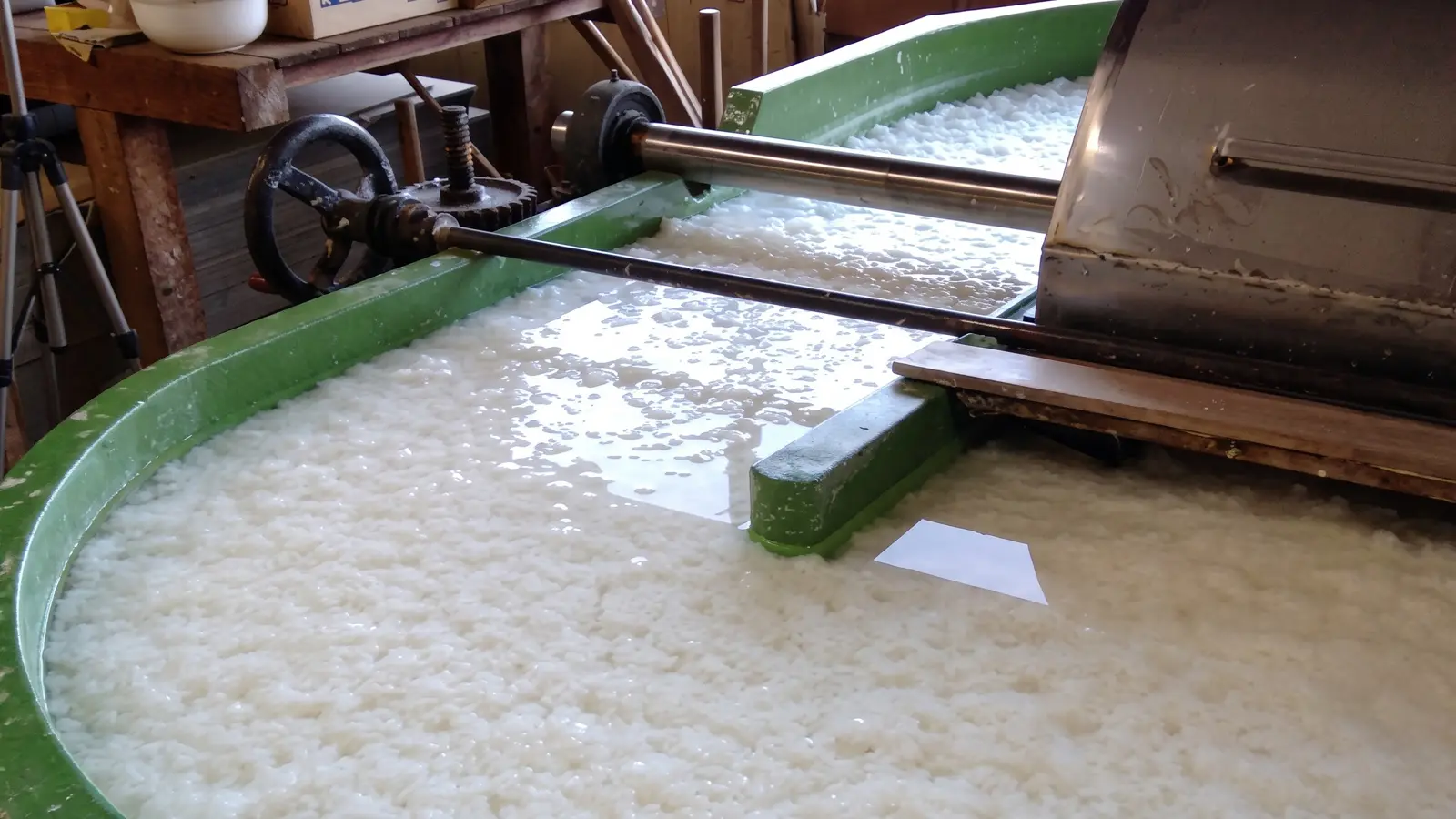
Fibers are elongated, flexible and compressible; they can mat across apertures, bridge, retain water, trap mineral fillers, and blind a screen in ways roughly equant sand particles do not. Fiber type, refining history, fines, fillers, stickies, biological growth, debris and chemistry all matter. Evaluate screen opening, open area, deck motion, angle, feed distribution, wash strategy, drainage, and retained-product handling with representative material.
Water Recovery for Process Reuse
“Clearer” water is not automatically suitable for reuse. The receiving mill process may care about fiber, fines, ash, temperature, pH, conductivity, hardness, dissolved solids, color, dissolved organics, microbes, stickies, residual chemicals, or other quality measures. Obtain a written receiving-stream specification and quantify the load returned to the process.
Fiber Recovery as a Value Stream, Not Just Waste Management
Treat fiber value as a hypothesis until the mill accepts it. Measure fiber length and quality, contaminants, ash/filler, stickies, moisture, variability, storage stability, reprocessing cost, and the effect on product quality. A short controlled mill trial and signed acceptance criterion are stronger than a generic claim that pond fiber can be reused.
Chemical Compatibility With Mill Process Chemistry
Pulp and paper mill process water can carry residual process chemicals (from pulping, bleaching, or other process stages) that affect both material handling considerations and potentially wetted-component material compatibility for separation equipment—confirming compatibility with the facility’s specific process chemistry, rather than assuming standard separation equipment materials are automatically suitable, is worth doing given the range of process chemistry that can be present depending on the specific mill and process type.
Coordination With Mill Operations and Production Schedule
Mill pond dredging frequently needs to be scheduled around the facility’s production calendar, particularly if the pond serves an active operational function (process water settling, fiber recovery) rather than being a fully inactive or decommissioned basin. Coordinating separation project timing and operations with mill production scheduling, similar to the operational coordination needed for active wastewater treatment lagoon dredging, helps avoid conflicts between the dredging project and the facility’s ongoing production needs.
Foam and Fiber Handling Considerations During Separation
Pumping, agitation and deck motion can entrain air or release surfactant-driven foam. Foam can reduce effective capacity, interfere with level control, carry solids, complicate housekeeping, and create exposure or overflow risks. Test defoamer compatibility with the mill process, use mechanical controls where practical, and define monitoring and response limits.
Confirming Fiber Content and Recovery Value Before Technology Commitment
Because fiber recovery can represent genuine economic value distinct from pure waste management, it’s worth conducting representative material sampling and, where fiber recovery is a real consideration, coordinating with mill process engineering to assess actual fiber content and quality before committing to a specific separation technology. A technology selected purely for water clarity performance might not deliver fiber in a form or quality suitable for reintroduction into production, meaning the fiber recovery goal (where it applies) should factor into technology evaluation from the start rather than being assessed only after a technology decision has already been made on other grounds.
Engineering Pros-and-Cons Framework
Use this framework during design review and bid leveling. It makes the trade-offs explicit and prevents a low equipment price from hiding downstream cost or risk.
| Mill objective | What to measure | Decision gate |
|---|---|---|
| Recover fiber | Fiber type, length, ash/filler, stickies, contaminants, moisture | Mill trial and quality acceptance |
| Recover water | TSS/turbidity plus process-specific chemistry and temperature | Receiving process specification |
| Reduce disposal volume | Retained mass, drainage, hauling moisture and acceptance | Total handling/disposal cost |
| Protect uptime | Tie-in, outage, bypass, foam, cleaning and redundancy | Operations-approved execution plan |
What to Send for a System Recommendation
- Pond/basin function and history, mill process, furnish/grade changes, sludge survey, dredge method, pump and flow/solids range, route, and schedule
- Fiber species/type/length, fines, fillers/ash, bark, plastics, wires, grit, stickies, coatings, dyes, density, rheology, temperature, pH, residual chemicals, odor, foam, and variability
- Target screen cut/panel, retained-fiber quality, water-return process and specification, downstream dewatering, residuals destination, recovery economics, and acceptance test
- Chemical/elastomer/material compatibility, polymer/defoamer plan, wash water, drainage, spill containment, worker controls, cleaning/decontamination, and waste classification
- Tie-in/outage window, production constraints, bypass/storage, skid/barge/access, lifting, power, conveyors, containers, staffing, spares, commissioning, decision date, and accountable mill contacts
Frequently Asked Questions
Can a standard mineral-slurry screen handle pulp fiber?
Possibly, but performance can be unpredictable without representative testing because fibers mat, bridge and retain water differently.
Can retained fiber go back to the paper machine?
Only after the mill defines and verifies fiber quality, contamination, ash, stickies, moisture, process impact, and economics.
Is screened water ready for process reuse?
Only if it meets the receiving process specification. Dissolved and fine contaminants may remain.
When is an agitator helpful?
When settling or inconsistent feed limits screening, provided the mill reviews foam, gas, shear, energy, and process impacts.
What should a pilot test record?
Feed rate/solids, panel, retained mass and quality, passing solids, water carryover, blinding, foam, wash demand, cleaning, wear, and downstream acceptance.
Related Slurry Separation Resources
- 4D shaker screens
- feed-conditioning agitators
- direct pump integration
- system configurations
- dewatering applications
Request a Project-Specific System Recommendation
Send the team your pump and flow data, solids concentration and particle distribution, material characteristics, screen or separation target, water and solids endpoints, site layout, utilities, operating schedule, and production goal. Slurry Separation can review the application and recommend a pump-matched, skid-mounted, barge-mounted, or modular configuration based on current product options.
Request a System Recommendation or call (619) 383-6312.