
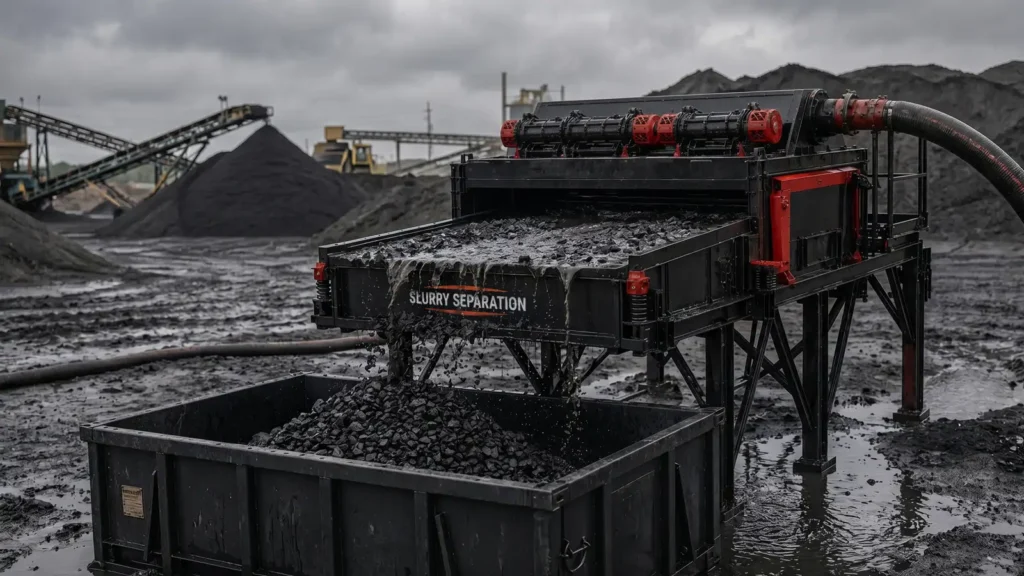
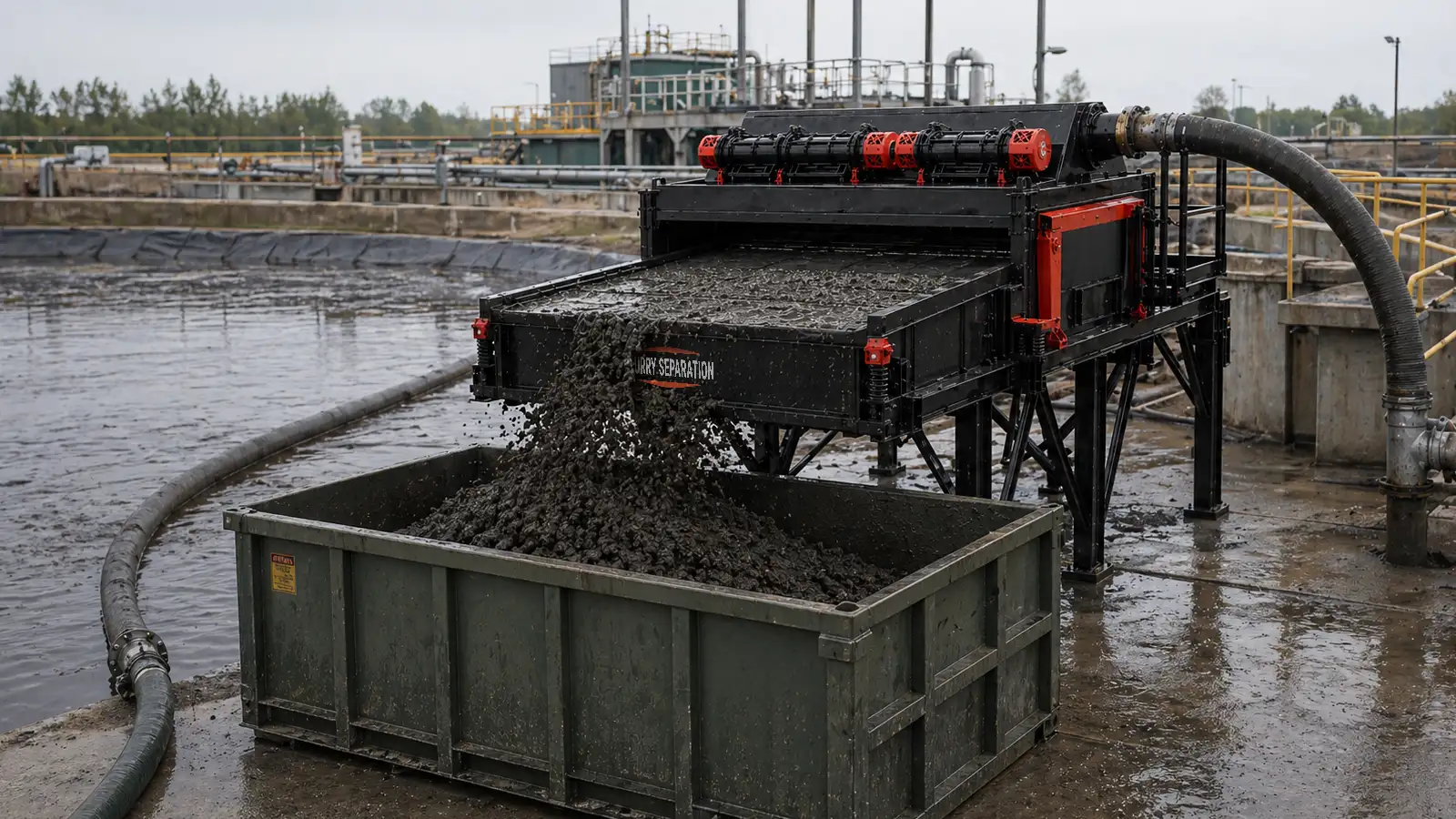
What is slurry separation?
Slurry separation is the process of removing solids from a slurry stream so water and solids can be handled more efficiently, typically by screening and dewatering material directly from the pump discharge to reduce water handling and produce drier solids.
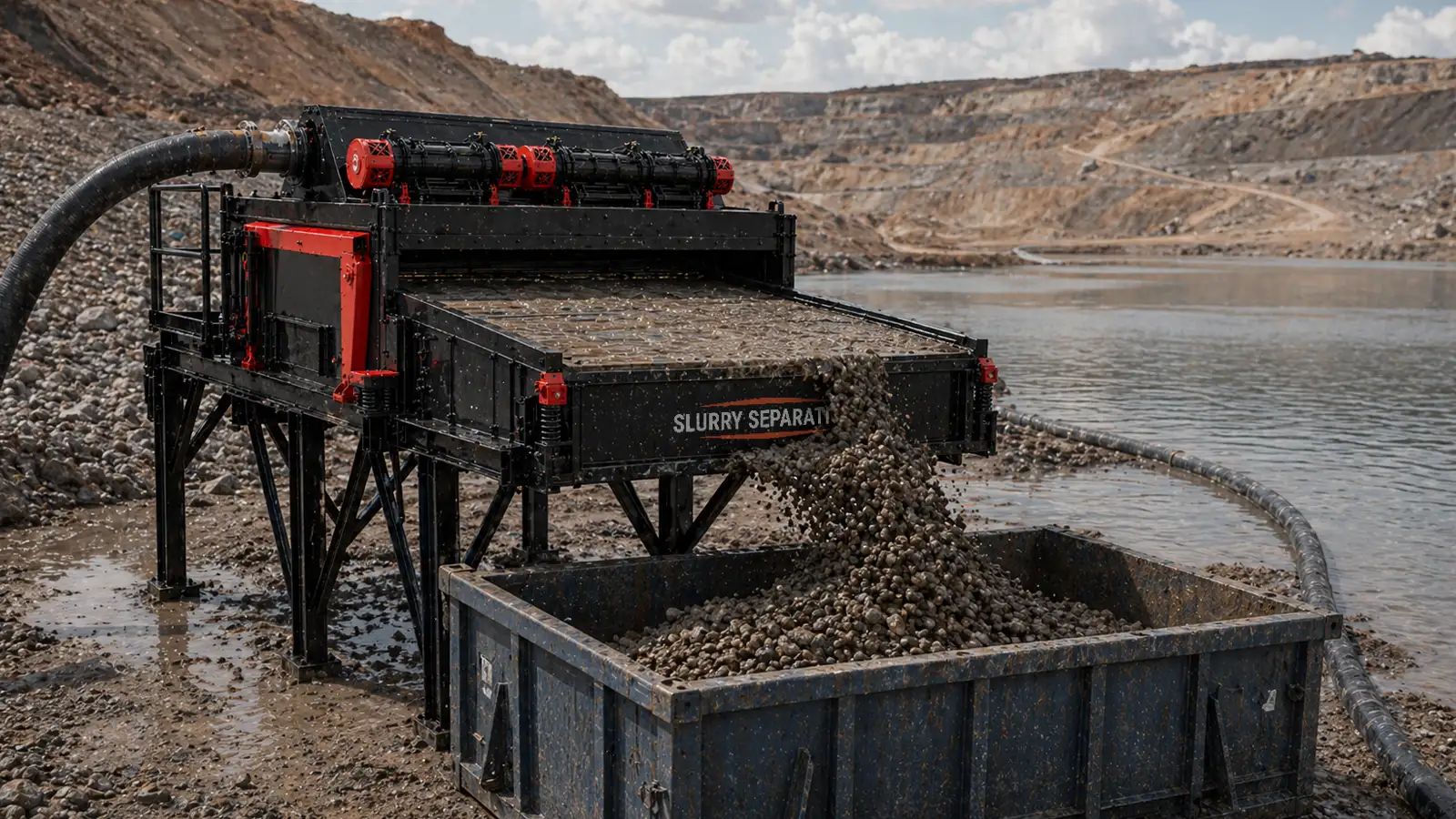
How do shaker systems work for dredging?
Shaker systems for dredging use vibrating screens to separate solids from slurry by allowing water to pass through while retaining solids, often using staged or multi-layer screening to handle high-solids loads and improve dewatering performance.
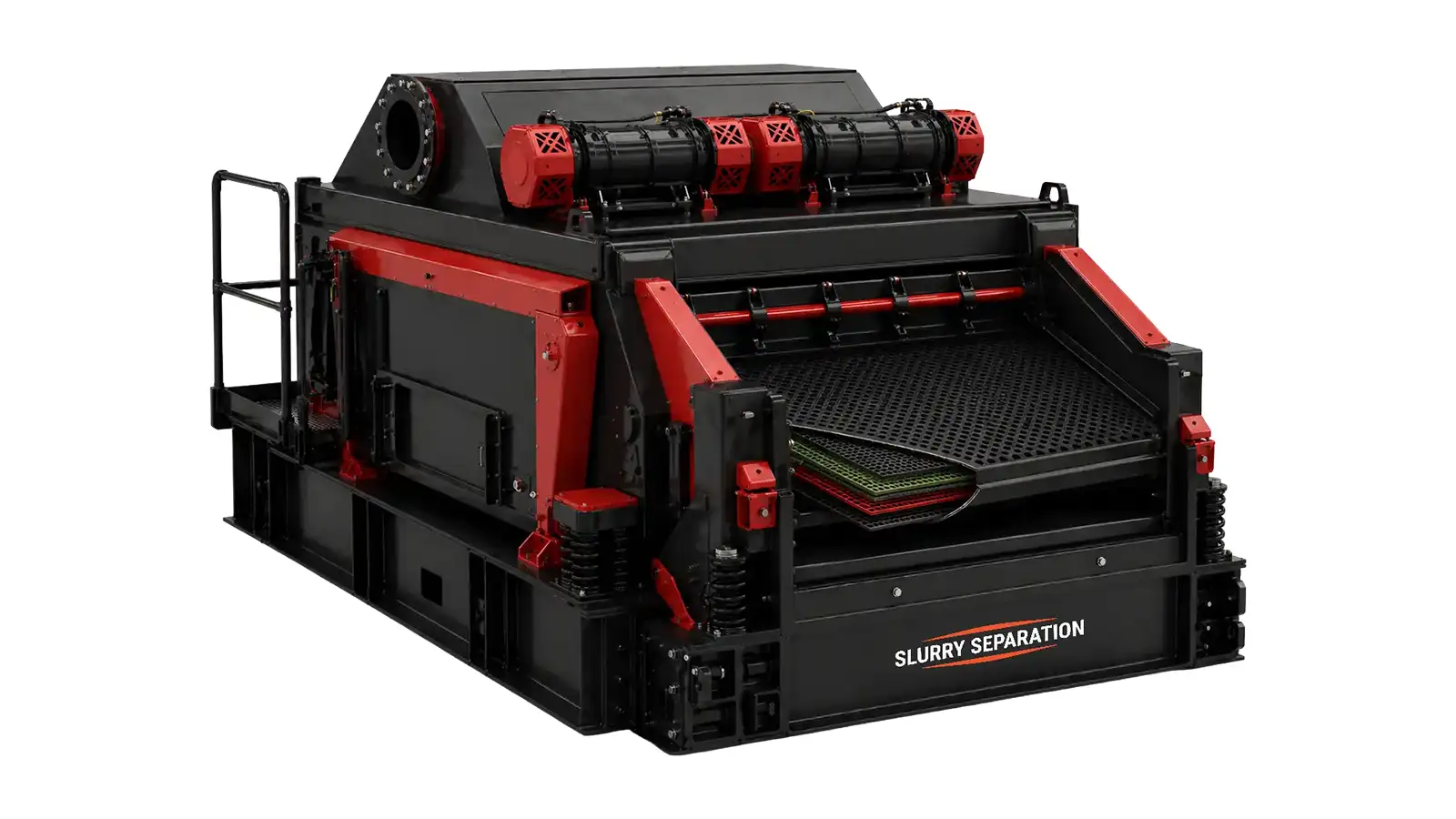
What is the best system for high-solids slurry?
The best system for high-solids slurry is a direct pump-to-shaker setup with multi-layer screening, which distributes separation across stages, reduces overload, and produces drier solids in abrasive, high-solids conditions.
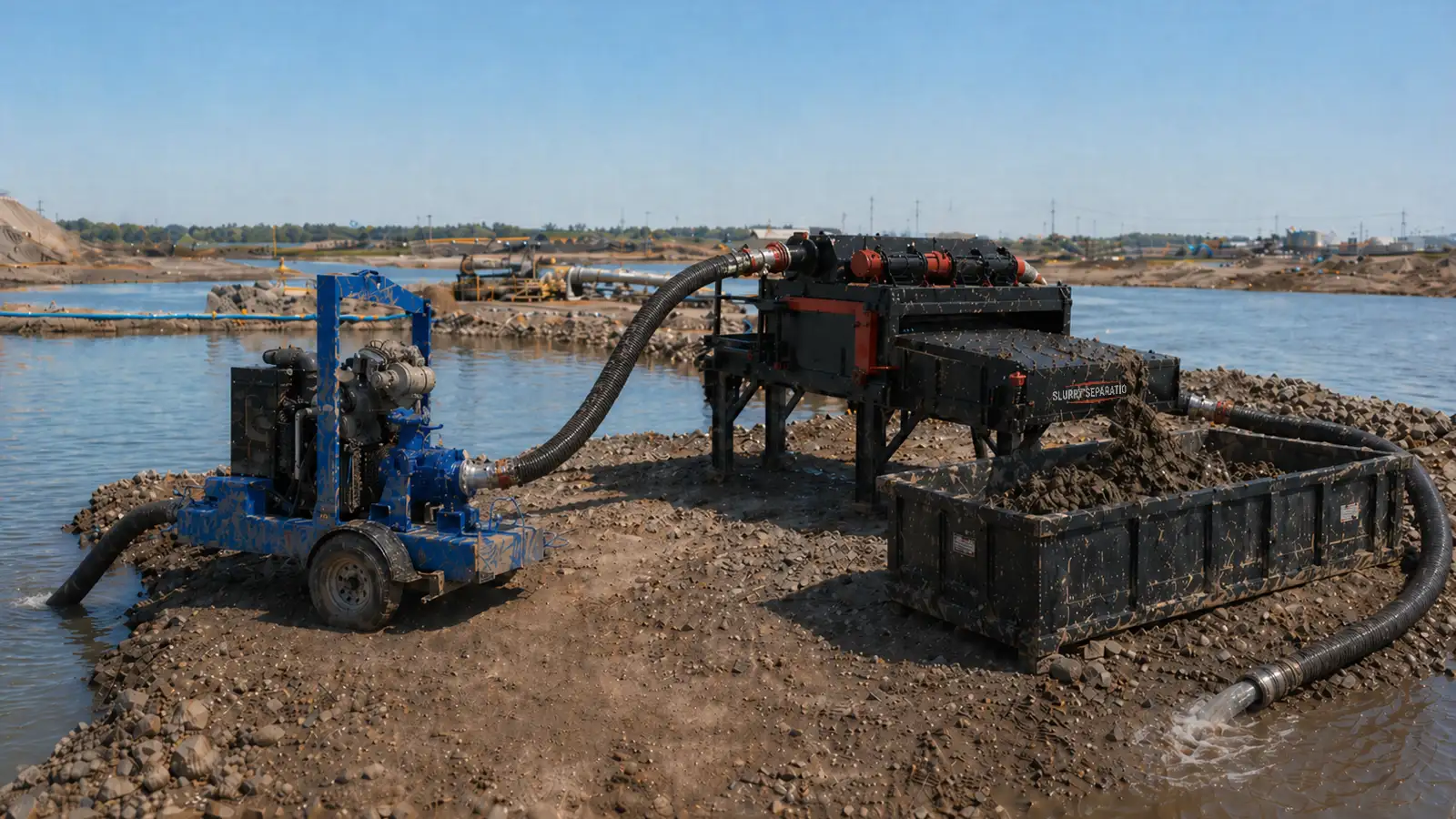
How do you dewater dredged material?
Dewatering dredged material is done by pumping slurry into a screening system where solids are progressively separated and moisture is removed through staged screening, resulting in drier, more manageable solids.
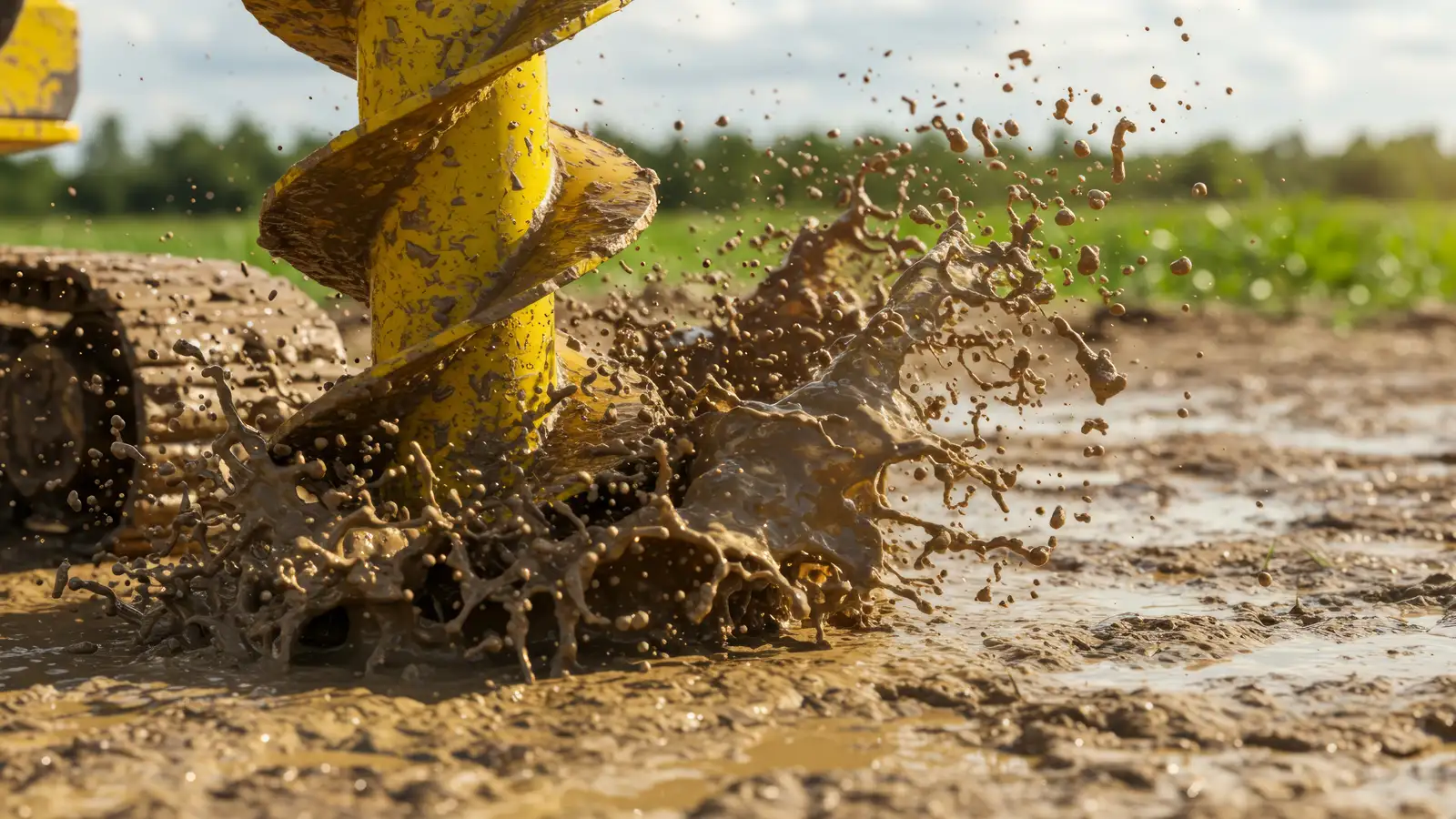
What is the difference between dredged slurry and drilling mud?
Dredged slurry is abrasive, variable, and contains mixed debris and particle sizes, while drilling mud is engineered and more uniform, making dredged slurry more challenging and requiring specialized separation systems.
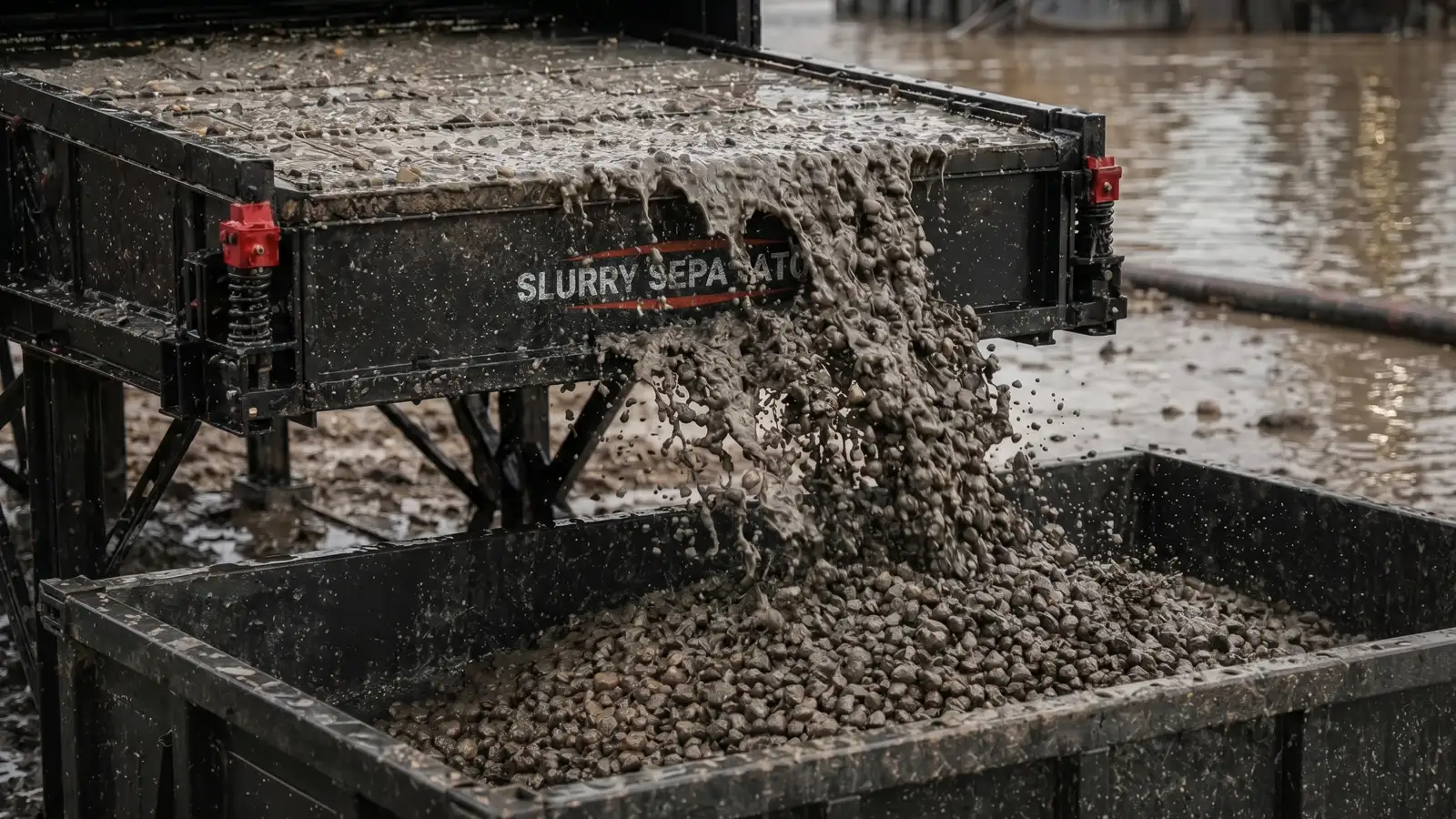
How do you reduce water carryover in discharged solids?
Water carryover is reduced by using multi-stage screening, improving material distribution, and incorporating fine dewatering layers that remove more moisture before discharge.
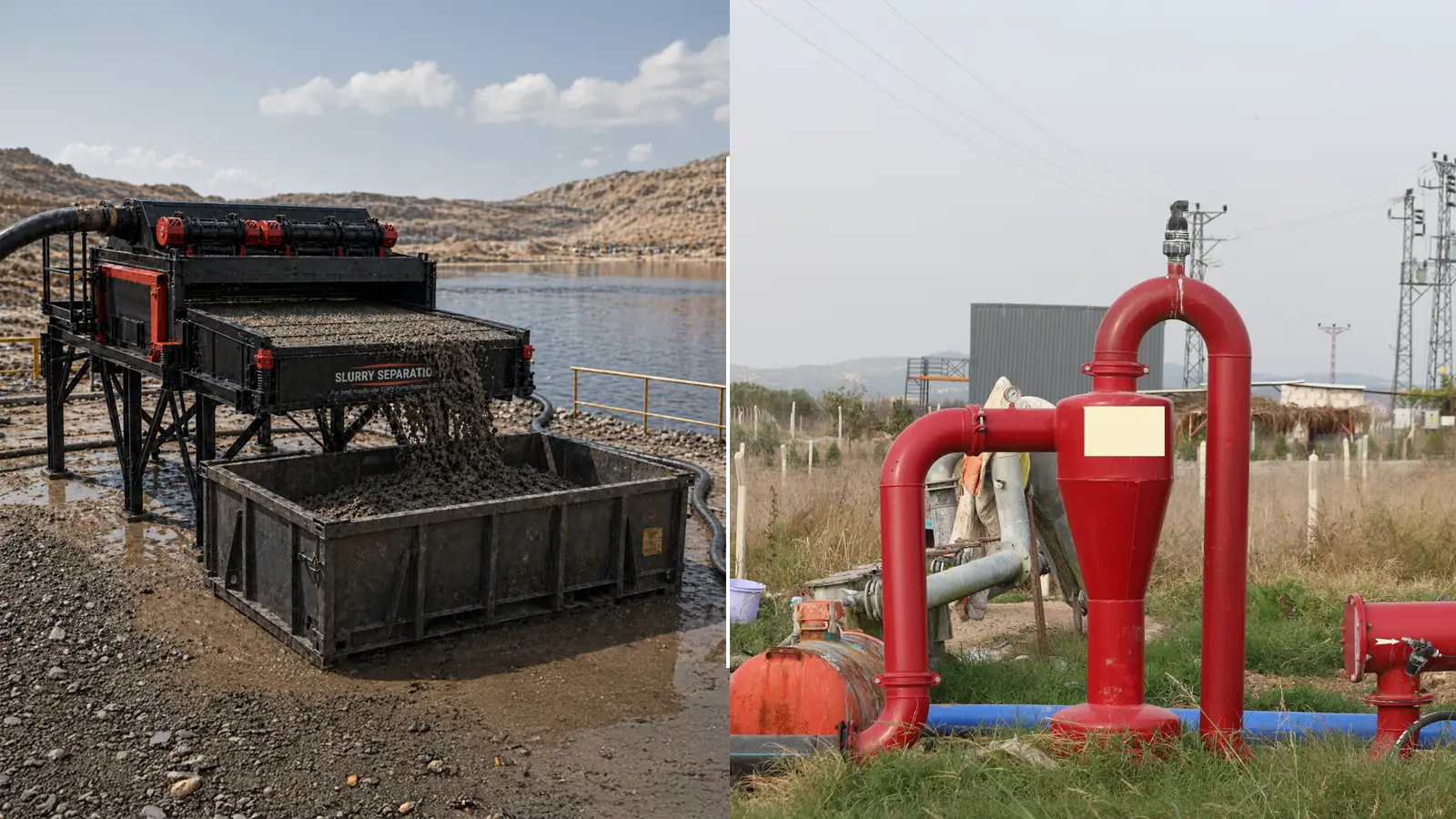
When should you use shaker screens versus hydrocyclones?
Shaker screens are used for primary solids separation and dewatering, while hydrocyclones are used for finer particle separation or as a secondary stage in a broader system.
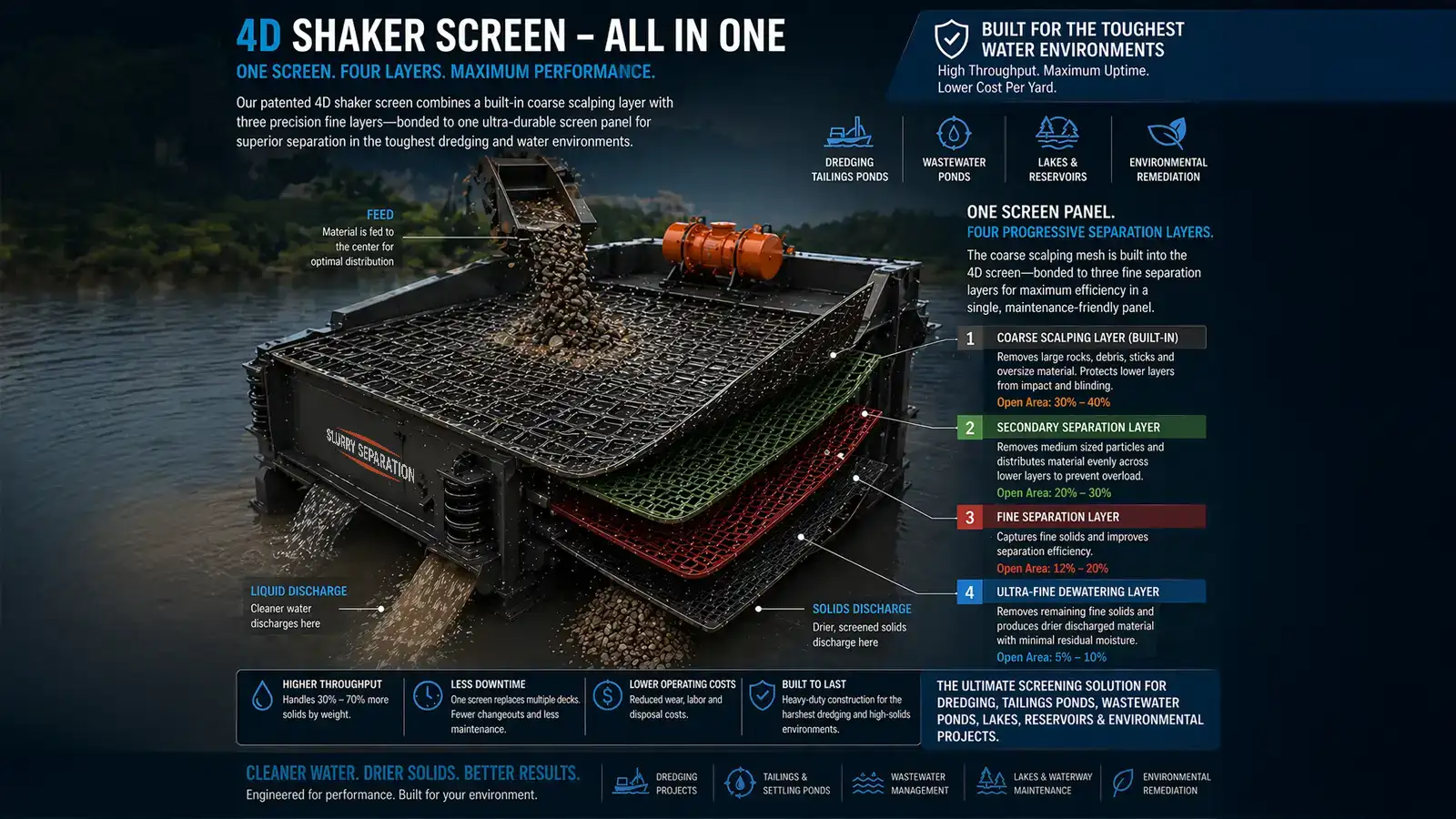
What is a 4D shaker screen?
A 4D shaker screen is a multi-layer screen panel that combines scalping, separation, and dewatering into one unit, improving throughput, reducing blinding, and producing drier solids.
What does an agitator do in a solids-heavy fluid system?
An agitator keeps solids suspended, prevents settling, and improves feed consistency, helping downstream separation systems operate more efficiently.